

Table of Contents
- How to Find Affordable Healthcare Options Without Insurance
- Low-Cost Health Clinics for Uninsured Patients
- Lab Tests Without Insurance: Where to Go and What to Expect
- Free or Low-Cost Preventive Care: Screenings and Checkups
- Self-Pay Medical Care: How to Negotiate and Save
- Prescription Medication Affordability Without Insurance
- When to Consider Insurance or Public Assistance
- Conclusion: Taking Control of Your Healthcare Costs
- Frequently Asked Questions
Last Updated: October 10, 2026
How to Find Affordable Healthcare Options Without Insurance
Finding affordable healthcare options without insurance starts with knowing which door to knock on first: a community health center for routine care, a retail clinic for minor issues, and a self-pay discount for everything else. At Avista Medical Center, the biggest mistake we see is people delaying care because they assume the bill will be unmanageable.
Below, we’ll show you where to go for low-cost care, how to read a self-pay price before treatment, and when a plan beats paying cash.
Self-pay medical care means paying for a visit, lab test, or procedure directly instead of through insurance. Providers often price self-pay differently from insured billing, which is why asking matters.
The 5 paths we cover, in the order most people should try them:
- Community health centers and federally qualified health centers (FQHCs)
- Retail clinics and urgent care for minor, same-day needs
- Direct-to-consumer lab testing for bloodwork
- Free or low-cost preventive screenings
- Self-pay negotiation and financial assistance programs
| Situation | Best First Stop | Why |
|---|---|---|
| Ongoing primary care, chronic conditions | Community health center / FQHC | Sliding-scale fees based on income |
| Sore throat, sprain, minor infection | Retail clinic or urgent care | Lower self-pay rate than an ER |
| Routine bloodwork | Direct-to-consumer lab | Transparent cash price, no order needed |
| Annual physical, screenings | Free clinic events, FQHC | Often no cost at all |
| Large or unexpected bill | Provider billing office | Self-pay and financial aid discounts |
Ask for the self-pay price before the visit, not after. Front-desk staff can usually quote a flat rate for common visits, and that number is frequently lower than what an insured patient’s plan is billed.
Low-Cost Health Clinics for Uninsured Patients
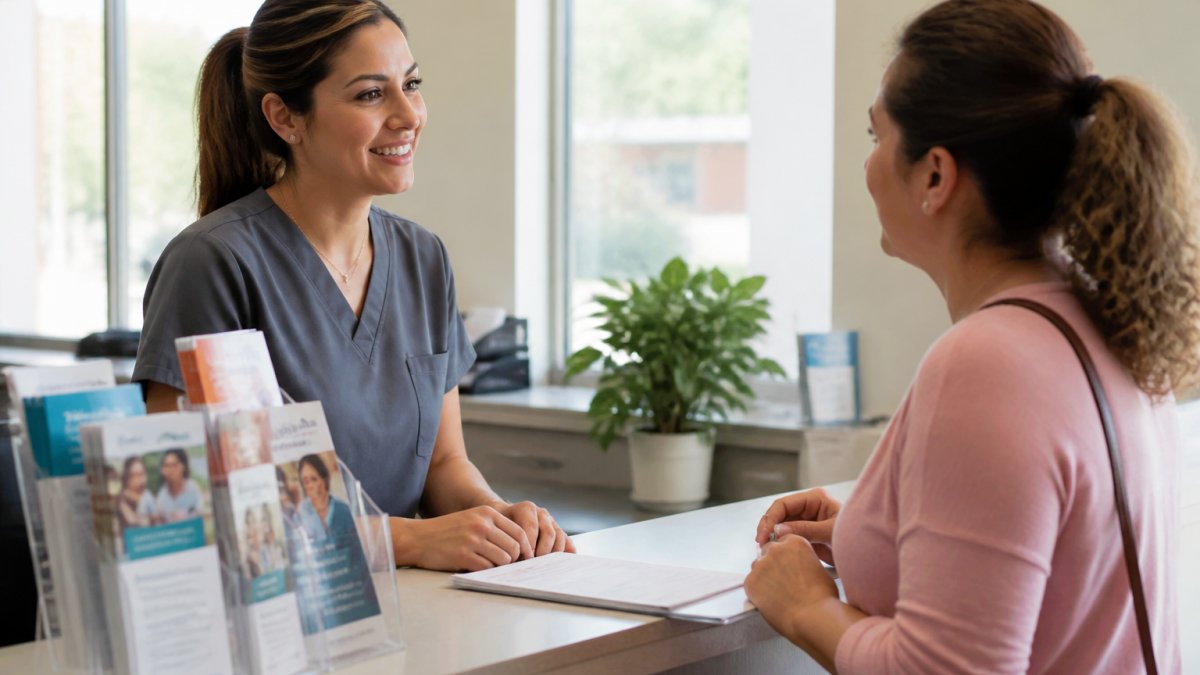
Low-cost health clinics are the backbone of care for people without coverage. The two types you’ll use most, community health centers and retail or urgent care clinics, serve different purposes.
Community Health Centers and FQHCs
Federally qualified health centers (FQHCs) receive federal funding to serve patients regardless of insurance status or ability to pay. They charge on a sliding fee scale tied to income and household size, so the same visit can cost far less for a lower-income household.
These centers usually offer primary care, preventive care, and some lab work under one roof, saving you from piecing together care across three offices.
Retail Clinics and Urgent Care
Retail clinics inside pharmacies and big-box stores handle simple problems, strep tests, ear infections, minor rashes, vaccinations, and post flat self-pay prices. Urgent care costs more but far less than an ER, and handles sprains, minor cuts, and basic imaging. The rule of thumb: if it isn’t life-threatening, it probably doesn’t belong in an ER, the most expensive setting in the system.
Lab Tests Without Insurance: Where to Go and What to Expect
Lab tests without insurance are more affordable than most people expect, because the cash price for common bloodwork is often a fraction of what gets billed to an insurer. Two practical routes: order the test yourself through a direct-to-consumer service, or have a primary care practice run it in-house.
Direct-to-Consumer Lab Testing
Direct-to-consumer lab companies let you order a panel online, then visit a local draw site. You pay upfront, see the price before you commit, and get results through a portal, good for routine panels like a complete blood count, metabolic panel, or thyroid check. What most guides miss is the follow-up problem: a raw result without a clinician to interpret it is only half useful.
In-House Labs at Primary Care Practices
Practices that run labs on site draw and process blood during your visit, keeping results with the clinician who ordered them. At Avista Medical Center, in-house blood draws and diagnostic services are built into the visit, with results typically back within 24 to 72 hours, a turnaround that matters when tracking a chronic condition or checking whether a treatment is working.
The cheapest lab test isn’t always the best value. A slightly higher price that includes a clinician’s interpretation and a follow-up plan usually saves money compared with ordering tests piecemeal and guessing at the results.
Free or Low-Cost Preventive Care: Screenings and Checkups
Free or low-cost preventive care is where uninsured patients save the most, because catching a problem early costs far less than treating it late. Here’s who funds it and how to find it.
Where free screenings actually come from
Free and low-cost preventive care is funded through a patchwork of programs. Knowing the source helps you find the right door:
- Federally qualified health centers (FQHCs), funded in part by the federal Health Center Program to serve patients regardless of insurance status or ability to pay, with preventive visits on a sliding fee scale tied to income and household size.
- Local and state health departments, run immunization clinics, blood pressure and blood sugar checks, tuberculosis and STI testing, and seasonal screening events, many free regardless of insurance or immigration status.
- Nonprofit and hospital-sponsored events, hospitals, faith organizations, and disease-specific nonprofits host periodic screening fairs, often in community centers and churches, usually advertised locally rather than online.
What to get screened for, and how often
Even without insurance, prioritize the screenings that catch silent conditions early:
- Blood pressure, at every opportunity; it’s fast, cheap, and often free.
- Blood sugar / A1C, for adults, especially with a family history of diabetes or risk factors.
- Cholesterol panel, for adults, typically every few years depending on risk.
How to find and book a free screening
- Call your county or city health department and ask what preventive services they offer and whether appointments are required, the single highest-yield call you can make.
- Search for FQHCs near you using the federal Health Center Program locator, then ask about the sliding fee scale and what documents to bring (usually proof of income and residency).
- Ask hospitals in your area about community screening events and charity care programs, many publish a calendar and don’t require insurance or immigration documentation.
- Check pharmacy and retail clinic websites for walk-in screening and vaccination prices, usually posted as flat cash rates.
- Ask about bundled visits, a single preventive visit including a physical, bloodwork, and vaccinations often costs less than booking each service separately. (Source: the National Association of Free & Charitable Clinics)
Bring proof of income and residency to any sliding-scale or free clinic visit. Having the documents on hand the first time can cut a follow-up trip and get you enrolled in the discount program on the spot.
Why preventive care pays for itself
An annual checkup is worth prioritizing even when money is tight. A primary care visit can catch rising blood pressure, early signs of diabetes, or a thyroid imbalance before they become an ER visit that costs many times more.
The people who save the most on uninsured care treat prevention as a scheduled expense, not an emergency response.
Self-Pay Medical Care: How to Negotiate and Save
Self-pay medical care rewards people who ask questions, because published prices and billed prices are rarely the same. Two habits save the most: requesting the self-pay rate before treatment, and negotiating any bill larger than expected.
Schedule with Dr. Punya Raman →
Asking for a Self-Pay Discount
Providers often discount for cash patients because it avoids the administrative cost of insurance claims. Ask directly: “What is your self-pay rate for this visit?” Get the number in writing before treatment when possible, and for planned procedures request a good-faith estimate so you know the total, not just the office visit fee.
Negotiating Medical Bills and Financial Assistance
If a bill is already in front of you, call the billing office and ask about a prompt-pay discount for paying in full, an interest-free payment plan, charity care or financial assistance programs (many hospitals and larger practices are required to offer them), and whether the bill was coded correctly, since errors are common. Nonprofit hospitals are generally expected to have a financial assistance policy, ask for it by name.
Ignoring a medical bill is the most expensive choice you can make. Unpaid balances can be sent to collections, which affects your credit and can make it harder to rent an apartment or get a loan. Call the billing office the moment a bill looks wrong or unpayable.
Prescription Medication Affordability Without Insurance
Prescription medication is one of the most fixable costs for uninsured patients. Start by asking your clinician whether a generic equivalent is available, since generics typically cost a fraction of brand-name drugs for the same active ingredient. Next, compare cash prices across pharmacies, the same prescription can vary widely between chains, warehouse clubs, and independent pharmacies, and a free discount card can lower it further.
When to Consider Insurance or Public Assistance
Insurance or public assistance is worth exploring the moment cash-pay care stops being occasional and becomes a recurring line in your budget. Two programs cover most uninsured people who qualify, and a third option exists for short gaps but comes with real trade-offs.
A simple eligibility decision tree
Work through these questions in order. The first “yes” is usually your best starting point.
- Is your household income at or below your state’s Medicaid threshold? Medicaid is free or very low cost for people who qualify. Thresholds vary by state, and many states have expanded eligibility to cover more low-income adults. Children, pregnant people, and people with disabilities often qualify at higher income levels than other adults.
- Do you have children, are you pregnant, or do you have a disability? These categories frequently qualify for Medicaid or the Children’s Health Insurance Program (CHIP) even when a single adult in the same household would not.
- Is your income moderate but you don’t have an employer plan? The ACA Marketplace is likely your path. Depending on income and household size, you may qualify for premium tax credits that lower your monthly premium, and at lower incomes, cost-sharing reductions that lower deductibles and copays on Silver-tier plans.
- Are you between jobs or facing a short coverage gap? A short-term health insurance plan may look attractive, but read the exclusions before you buy (see below).
- Are you healthy and only need occasional care? Self-pay primary care or a medical membership may cost less per year than a premium you rarely use.
What actually affects your eligibility
Four factors drive almost every determination:
- Income, measured against the federal poverty level, updated annually. Marketplace subsidies use your estimated household income for the coverage year, not last year’s tax return.
- Household size, the number of people on your tax return, including dependents. A larger household raises the income threshold for both Medicaid and subsidies.
- Immigration status, many lawfully present immigrants qualify for Marketplace coverage and subsidies; Medicaid rules are stricter and vary by state. Emergency Medicaid may cover emergency care regardless of status in many states.
Short-term health insurance: read the fine print first
Short-term plans are cheaper for a reason, and the gap between premium and coverage is where people get hurt. Before you buy, confirm:
- Pre-existing condition exclusions, most short-term plans can deny coverage or refuse to pay for anything related to a condition you had before the policy started.
- Benefit caps, many cap total payouts per period or per condition, leaving you responsible above the cap.
- Excluded services, prescription drugs, maternity care, mental health, and preventive care are commonly excluded or limited.
A low premium is not the same as comprehensive coverage. If you have any ongoing condition, a short-term plan is usually the wrong tool.
| If your situation is… | Start here |
|---|---|
| Low income, children, pregnant, or disabled | State Medicaid or CHIP program |
| Moderate income, no employer plan | ACA Marketplace with premium tax credits |
| Healthy, need only occasional care | Self-pay primary care or membership |
| Between jobs, temporary gap | Short-term plan, with caution |
Don’t assume you earn too much to qualify. Subsidy thresholds are higher than many people expect, and a Marketplace plan with tax credits can cost less per month than a single urgent care visit paid in cash. Run the numbers before you rule it out.
For official eligibility rules and enrollment windows, check HealthCare.gov official marketplace information and Medicaid.gov eligibility guidance.
Conclusion: Taking Control of Your Healthcare Costs
The uninsured gap is manageable when you treat cost as a question to ask rather than a bill to fear. The people who pay the least call ahead, request the self-pay rate, and know which door to walk through for which problem.
If you’re in Gilbert and want a predictable, cash-pay path for primary care, lab work, and preventive screenings, Avista Medical Center is built for exactly that. Our in-house blood draws return results within 24 to 72 hours, our medical memberships bundle routine care into one clear cost, and Dr.
Frequently Asked Questions
Where can I get medical care if I don’t have health insurance?
You have several options for affordable healthcare without insurance. Community health centers and federally qualified health centers (FQHCs) provide care on a sliding fee scale based on income. Retail clinics and urgent care centers offer transparent self-pay rates for common illnesses. Direct primary care practices and medical memberships charge a monthly fee for unlimited visits. For lab tests without insurance, you can use direct-to-consumer lab services or in-house labs at primary care offices. Always call ahead to ask about self-pay discounts and financial assistance programs.
How can I find affordable healthcare without insurance?
Start by searching for low-cost health clinics in your area, such as community health centers or FQHCs. These clinics offer primary care, preventive services, and sometimes dental and mental health care on a sliding scale. Retail clinics inside pharmacies can treat minor issues at set cash prices. For ongoing care, consider a direct primary care membership or a medical membership program that includes visits and labs for a flat monthly fee. Compare self-pay rates before booking and ask about discounts for paying upfront.
Can I get preventive screenings without health insurance?
Yes, many organizations offer free or low-cost preventive care. Community health centers provide screenings like blood pressure checks, cholesterol tests, and cancer screenings on a sliding scale. Some public health departments offer free screenings for specific conditions. National programs like the CDC’s National Breast and Cervical Cancer Early Detection Program provide free or low-cost mammograms and Pap tests for eligible women. For lab tests without insurance, direct-to-consumer lab services allow you to order tests online and visit a local draw site.
Are community health centers free for uninsured patients?
Community health centers, including FQHCs, are not entirely free but charge on a sliding fee scale based on your income and family size. If your income is below a certain threshold, you may pay a nominal fee or nothing at all. They accept patients regardless of insurance status or ability to pay. Services typically include primary care, preventive care, and sometimes dental and behavioral health. To find one, search for ‘FQHC near me’ or contact your state’s primary care association.
How do I ask a doctor for a self-pay discount?
When scheduling your appointment, tell the receptionist you are uninsured and paying cash. Ask if they offer a self-pay discount or a cash-pay rate. Many practices reduce fees by 20-50% for self-pay patients because they avoid insurance paperwork. If you are already facing a bill, call the billing office and request a discount or a payment plan. You can also ask for an itemized bill to check for errors and compare prices. Being polite and proactive often leads to better outcomes.
What are the cheapest options for prescription medications without insurance?
Several strategies can lower prescription costs. Ask your doctor for generic alternatives, which are often much cheaper than brand-name drugs. Use discount cards like GoodRx or the pharmacy’s own savings program. Compare prices at different pharmacies, including big-box stores and online pharmacies. For ongoing medications, consider a 90-day supply, which usually costs less per dose. Some pharmaceutical companies offer patient assistance programs for low-income individuals. Always check if the medication is on a $4 list at retailers like Walmart or Target.