
Table of Contents
- Why a Family Practice with On-Site Labs Changes Your Care
- What In-House Lab Testing Actually Covers
- Primary Care Blood Work: What Gets Ordered and Why
- Primary Care Lab Results Turnaround Time, Explained
- Choosing a Primary Care Physician for Your Household
- Cost, Insurance, and Cash-Pay Options for Lab Work
- Frequently Asked Questions
Last Updated: October 12, 2026
Why a Family Practice with On-Site Labs Changes Your Care
A family practice with on-site labs draws your blood, runs the tests, and returns results without sending you across town. That single change shortens the gap between a concern and an answer, and it keeps your care under one roof. At Avista Medical Center, we built our Gilbert practice around exactly that idea: in-house blood draws and diagnostics that support early detection and faster decisions. (Source: the Centers for Disease Control and Prevention (CDC) on cholesterol testing)
The convenience is real, but it is not the main point. When your primary care physician orders primary care blood work and the sample is drawn minutes later in the same building, nothing gets lost between the order and the lab. You skip a second appointment, a second waiting room, and the follow-up call that never quite happens. Testing stops being a hurdle and becomes a routine part of the visit.
Below, we break down what in-house lab testing actually covers, what still goes out to a reference lab, how long results take, and how to choose a primary care physician for your whole household.
What In-House Lab Testing Actually Covers
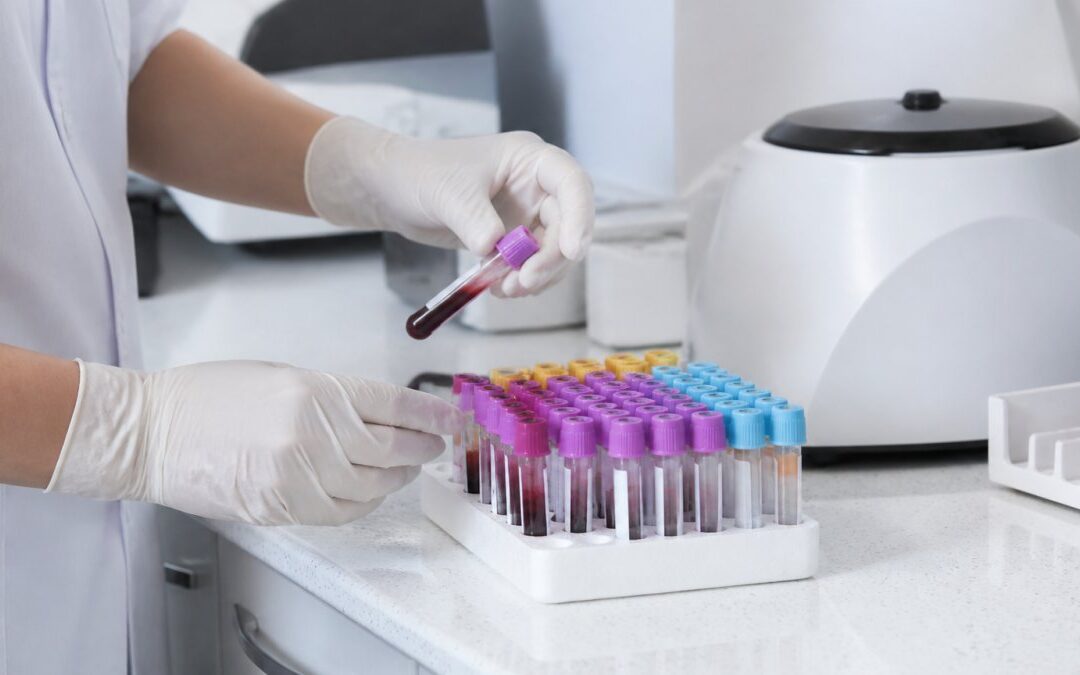
In-house lab testing covers the routine panels most visits require: a complete blood count, a comprehensive metabolic panel, a lipid panel, thyroid function, and A1c for blood sugar. These are the tests that answer the everyday questions a primary care visit raises.
Routine Panels Drawn During a Visit
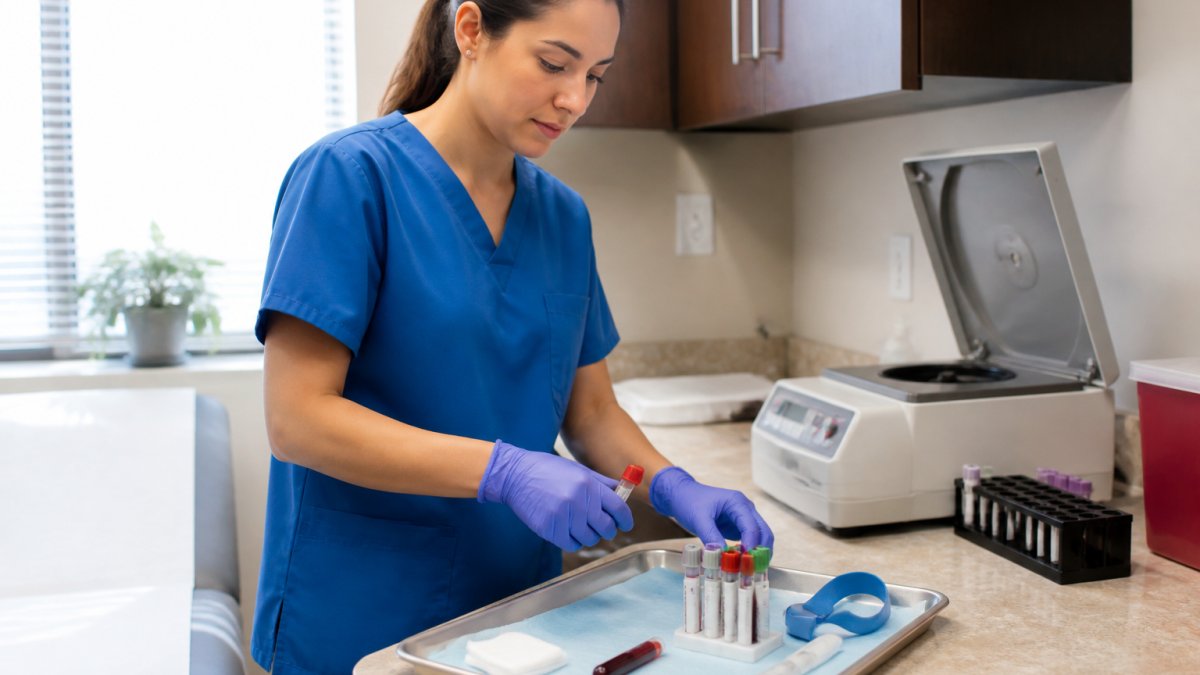
When your provider orders standard blood work, the draw happens during your appointment. Common examples include:
- Complete blood count (CBC): screens for anemia, infection, and clotting issues
- Comprehensive metabolic panel (CMP): checks kidney function, liver function, and electrolytes
- Lipid panel: measures cholesterol and triglycerides (the CDC)
- Hemoglobin A1c: reflects average blood sugar over roughly three months
- Thyroid panel: assesses how well your thyroid is working
- Urinalysis: a quick screen for infection, hydration, and kidney health
For most patients, these panels cover the bulk of routine monitoring. If you manage a chronic condition like diabetes or thyroid disease, your provider may repeat them on a set schedule.
Tests That Still Go to an Outside Laboratory
Not every test runs in-house, and that is normal. Specialized or uncommon tests, such as certain genetic panels, complex hormone assays, or tissue pathology, typically go to a reference laboratory. The difference is that the draw still happens with us, so you are not making a separate trip. Your provider sends the sample out and follows up when results return.
Primary Care Blood Work: What Gets Ordered and Why
Primary care blood work is ordered to answer a specific question, not to run every test available. Your provider chooses panels based on your symptoms, history, medications, and risk factors.
A few examples of the reasoning behind common orders:
- Fatigue and pale skin point toward a CBC to check for anemia
- Rising blood pressure or a family history of diabetes prompts an A1c and metabolic panel
- Weight changes, hair thinning, or temperature sensitivity suggest a thyroid panel
- Starting a new medication often calls for a metabolic panel to establish a baseline
This is where a family practice with on-site labs earns its keep. Your provider can order a test, see the result quickly, and adjust the plan in the same visit cycle rather than waiting a week for a phone call. For anyone tracking a chronic condition, that loop matters more than the test itself.
Ask your provider which results you will get a call about versus which you can view in your patient portal. Knowing the difference prevents the anxiety of waiting for a call that was never scheduled.
::: (Source: the U.S. Department of Health and Human Services’ guidance on primary care)
Primary Care Lab Results Turnaround Time, Explained
Primary care lab results turnaround time depends on where the test is run. Panels processed in-house typically return faster than tests sent to an outside laboratory. At Avista Medical Center, patients generally receive results within 24 to 72 hours, which lets us reach out quickly when something needs attention.
Several factors affect the timeline:
- In-house versus send-out: routine panels run on-site move faster than specialized tests
- Test complexity: some assays require culturing or multiple processing steps
- Provider review: results are reviewed before they reach you, which adds a short step but catches anything urgent
- How you receive them: portal results and phone calls may arrive on different schedules
If a result is critical, the practice contacts you directly rather than waiting for a routine follow-up. When you choose a practice, ask how they handle abnormal results and who calls you. That answer tells you more about their follow-through than any brochure.
Schedule with Dr. Punya Raman →
Choosing a Primary Care Physician for Your Household
Choosing a primary care physician comes down to access, continuity, and whether the practice can handle your family’s range of needs. A physician you can reach, who knows your history, and who can order and act on tests quickly is worth more than a name on a list.
Questions to Ask Before Your First Appointment
Bring these to your first call or visit:
- Does the practice draw labs on-site, and which tests are included?
- How long do results usually take, and how are they delivered?
- Who reviews abnormal results, and how soon will someone contact me?
- Can the practice manage chronic conditions, or will I be referred out?
- What are the costs, and do you offer cash-pay or membership options?
- How are same-day or urgent concerns handled?
A practice that answers these clearly is usually a practice that communicates well when it matters.
Cost, Insurance, and Cash-Pay Options for Lab Work
Lab work costs vary widely depending on your insurance, the specific tests ordered, and whether the practice offers cash-pay or membership pricing. Because those numbers depend on your plan and the panels your provider orders, we recommend asking for a clear estimate before your visit rather than assuming.
A few ways patients manage the cost:
- Insurance: most plans cover medically necessary lab work, though deductibles and copays apply
- Cash-pay pricing: some practices publish discounted rates for patients paying out of pocket
- Medical memberships: a monthly membership can bundle visits and discounted labs into one predictable cost
- Preventive visits: annual physicals often include certain screenings at no additional cost under most plans
If you are uninsured or underinsured, ask directly about cash-pay rates and membership options. A practice that offers them will usually explain exactly what is included, which removes the surprise at the front desk.
Never assume a test is covered just because your provider ordered it. A quick call to your insurance before a non-routine panel prevents a bill you did not plan for.
Finding a practice that draws, runs, and explains your labs under one roof changes how quickly you get answers. At Avista Medical Center, our patient-first family medicine, in-house blood draws, and diagnostic services are built to shorten that loop, with results typically back within 24 to 72 hours. Dr. Punya Raman and our team also offer medical weight loss led by a Board-Certified Bariatrician, hormone therapy, and immunotherapy, all supported by affordable pharmacy services and comprehensive medical memberships. Schedule with Dr. Punya Raman and get lab answers without the runaround.
Frequently Asked Questions
What does it mean when a family practice has on-site labs?
It means the practice can draw and process certain blood or urine samples in its own building instead of sending you to a separate lab. You get the draw during your appointment, and the practice controls the sample from collection onward. Not every test can be run this way, so ask which panels are processed in-house versus sent out.
How quickly do on-site lab results come back?
Turnaround depends on the test and the practice. Some in-house labs return routine results within 24 to 72 hours, while send-out tests can take longer. Ask the front desk for the practice’s typical window for the specific panel your doctor orders, and confirm whether results arrive through a patient portal or a phone call.
Can a primary care doctor order blood work during an appointment?
Yes. A primary care physician can order primary care blood work as part of a routine visit, an annual physical, or a follow-up for a chronic condition. If the practice has in-house lab testing, the draw often happens in the same visit, which saves you a second trip and keeps your results tied to the same medical record.
Do I need a separate appointment for lab work at a family practice?
Often you do not. Many practices with on-site labs draw samples during your scheduled visit, right after the physician orders them. Some offices also offer drop-in lab hours for patients who already have an order on file. Call ahead to confirm whether your practice requires a scheduled slot or accepts walk-ins for draws.
Does insurance cover lab work done at a family practice?
Coverage varies by plan and by test. Many insurance plans cover medically necessary lab work, but routine screening panels may fall under preventive benefits with different rules. If you are uninsured or underinsured, ask about cash-pay pricing or a medical membership before the draw so there are no surprise charges. Request the cost in writing when possible.